
MaxScherben
Reducing CO2 emissions in glass manufacturing by increasing the proportion of recycled glass through improved cullet characterization
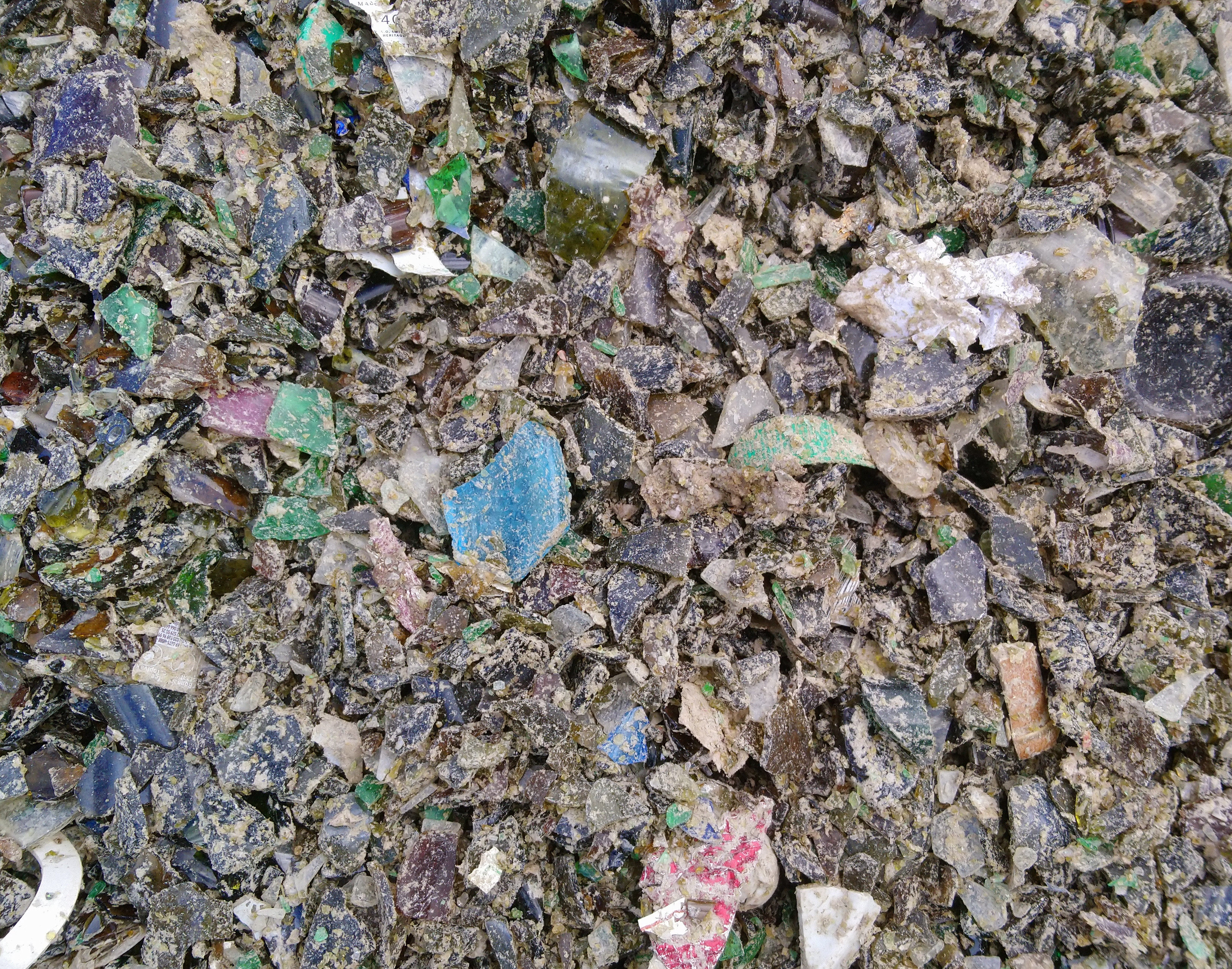
Broken glass from the glass recycling collection - © Andreas Rosin, Keylab Glastechnologie
In container glass manufacturing, recycled glass cullet accounts for the largest share of raw materials by volume in the melting process for new glass bottles. Today, recycled glass is sorted by high-performance processing plants and thus efficiently transformed into a valuable secondary raw material. On average, 65% recycled cullet is currently used in bottle production. However, its effectiveness decreases as particle size decreases. Therefore, fine and ultrafine cullet, which usually contains both organic and inorganic impurities, is sorted out of the recycling cycle and either diverted to other uses or landfilled.
These cullet fractions are to be made more accessible to glass recycling with the help of new analytical methods for quantifying the proportion of impurities, such as the carbon content. As part of the project, the University of Bayreuth is developing a plasma-induced gas analysis method. The methodology being developed is intended to determine the carbon content of the glass cullet, primarily to enable glass furnace operators to perform rapid inline analysis of the cullet. In parallel, the HVG-DGG is analyzing the exact composition of the impurities using laser-induced breakdown spectroscopy (LIBS), and TAZ Spiegelau is investigating how different carbon impurities affect glass quality during melting and how these effects can be mitigated if necessary.
Ultimately, the goal of the project is to increase the proportion of usable recycled cullet for the container glass industry and to better close the material cycle. An increase in the recycling rate for this grain size fraction — which is considered problematic — by approximately 10% would reduce energy consumption during melting by about 3% and process-related CO2 emissions by 5–7%, which would correspond to a reduction of approximately 120,000 tons of CO2 per year in Germany.
Project Profile

Duration: 01.10.2022 - 31.03.2025
Funding: IGF / DLR-PT (Nr. 22607 N)
Project Partners:
- Institut der Hüttentechnischen Vereinigung der Deutschen Glasindustrie e.V.
- Technische Hochschule Deggendorf Technologie Anwender Zentrum Spiegelau TAZ
- Universität Bayreuth, Keylab Glastechnologie
Contact: Dr.-Ing. Andreas Rosin